
Part of EAFO’s Series on EV Market Trends Across Europe
🔔 Subscribe to our newsletter for the latest updates: Subscribe here
📢 Follow us on LinkedIn for more insights: EAFO LinkedIn
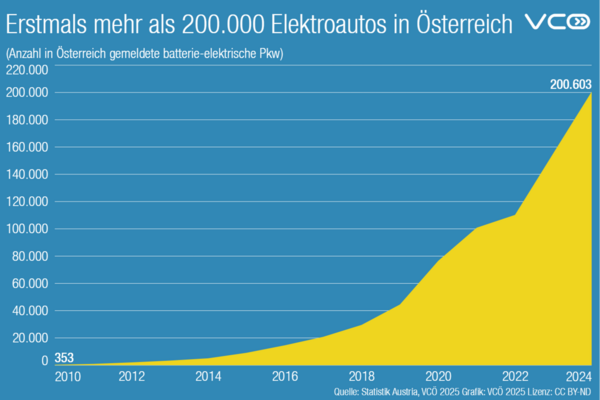
Austria reached a significant milestone in 2024, surpassing 200,000 registered battery-electric vehicles (BEVs). The total number of BEVs registered by the end of the year stood at 200,603, a substantial increase from 155,490 in 2023. However, the pace of growth in BEV registrations slightly declined in 2024, with 44,622 new BEVs registered, compared to 47,621 in 2023.
Regional Breakdown of BEV Registrations in 2024
The distribution of BEV registrations varied across Austria's regions:
- Vienna led with 11,278 BEVs, making it the dominant contributor to Austria's BEV expansion.
- Lower Austria followed with 7,717 BEVs.
- Upper Austria and Styria saw substantial registrations of 7,769 and 4,782 BEVs, respectively.
- Regions like Burgenland and Vorarlberg contributed smaller numbers, with 1,377 and 1,986 BEVs, respectively.
Market Share and Energy Transition
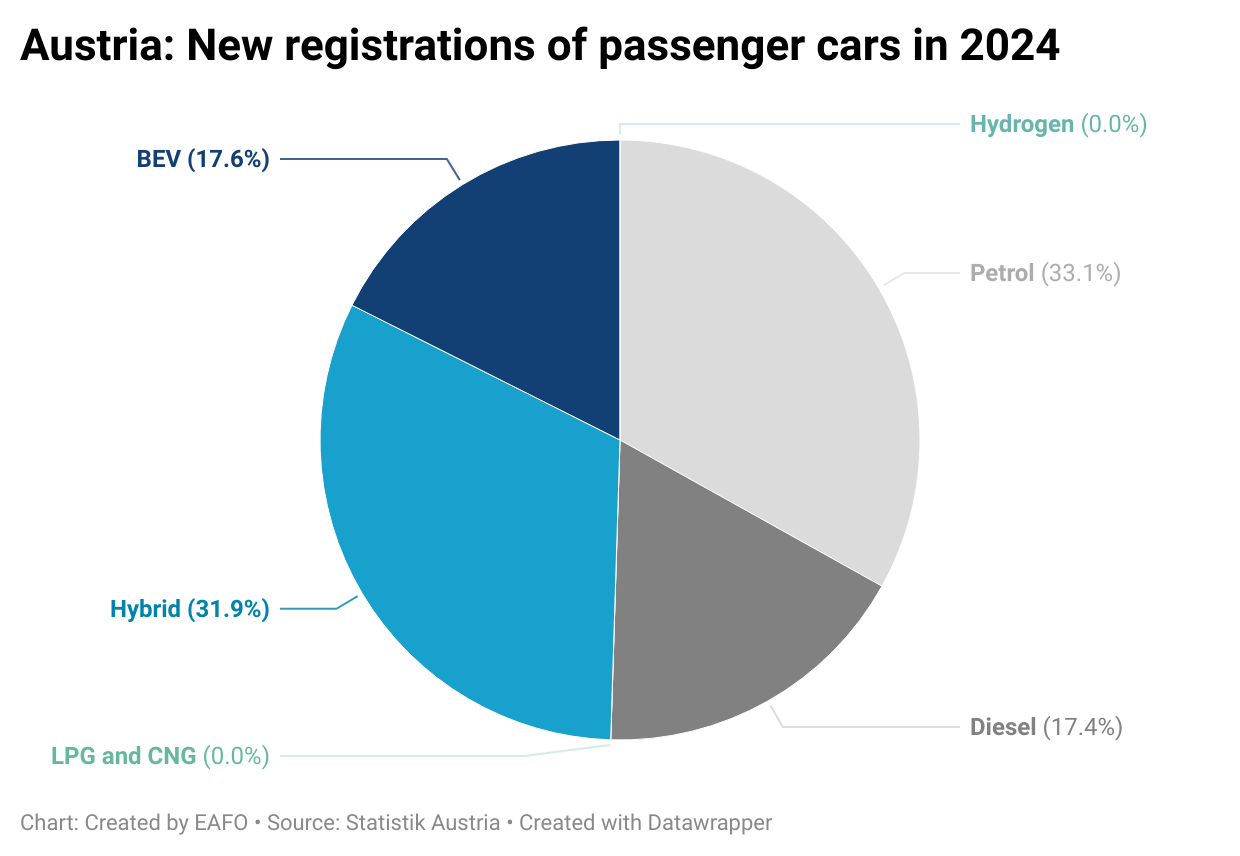
BEVs accounted for 17.6% of new passenger car registrations in Austria, signalling a steady, though not rapid, transition toward cleaner mobility.
Despite these gains, BEVs still represent only 4% of Austria’s total car fleet. Fossil-fuel-powered vehicles, particularly petrol cars, dominate the fleet, with over 75% of all registered cars running on conventional fuels. Hybrid vehicles (petrol and diesel combined) added to the greener segment, with 66,672 registrations.
Policy and Market Challenges
The Austrian Association for Sustainable Mobility (VCÖ) highlighted the need for better policies to avoid lagging behind other European leaders in electromobility. Key challenges include:
- Vehicle Size and Energy Use: Larger, overpowered BEVs undermine energy and environmental gains. Countries like Norway impose taxes based on vehicle weight to promote efficiency.
- Regulatory Uncertainty: Austria lacks a clear long-term policy for electric mobility, affecting market confidence and investments.
- Subsidies and Taxes: High taxes on petrol and diesel cars, similar to Denmark’s approach, could accelerate the shift toward electric mobility. Additionally, restructuring Austria’s diesel tax advantage could provide both environmental and fiscal benefits.
Conclusion
While surpassing 200,000 BEVs marks a significant milestone, Austria faces crucial challenges to maintain momentum. Strengthening incentives, improving infrastructure, and addressing policy gaps will be essential for Austria to achieve its climate and energy goals in the coming years.
Austria's journey in electrification underscores the need for collaboration among policymakers, industry stakeholders, and consumers to realize a sustainable mobility future.
Source:
Views and opinions expressed are those of the author(s) and do not reflect those of the European Commission.